
 STAMTEC IN 60 SECONDS:
STAMPING PRESS BLOG
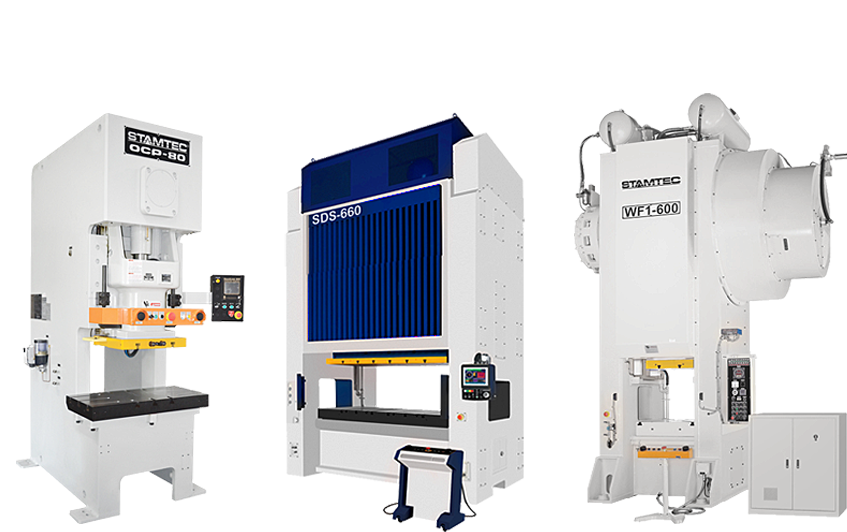
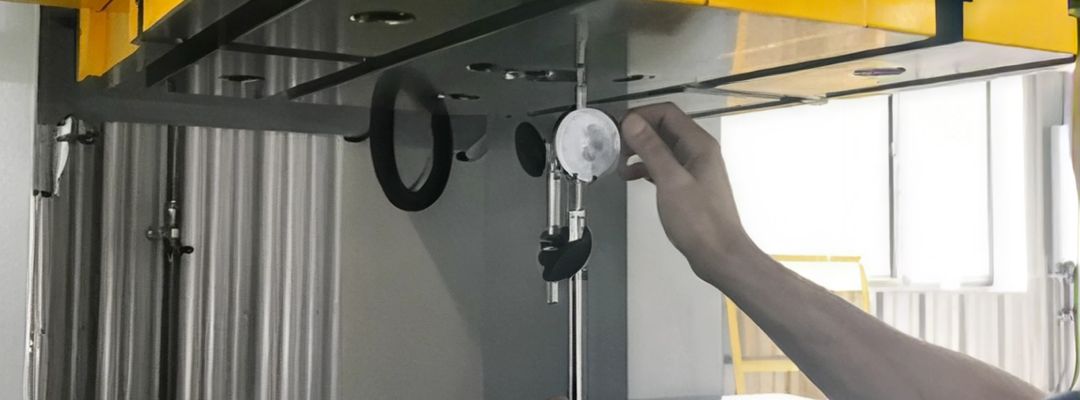
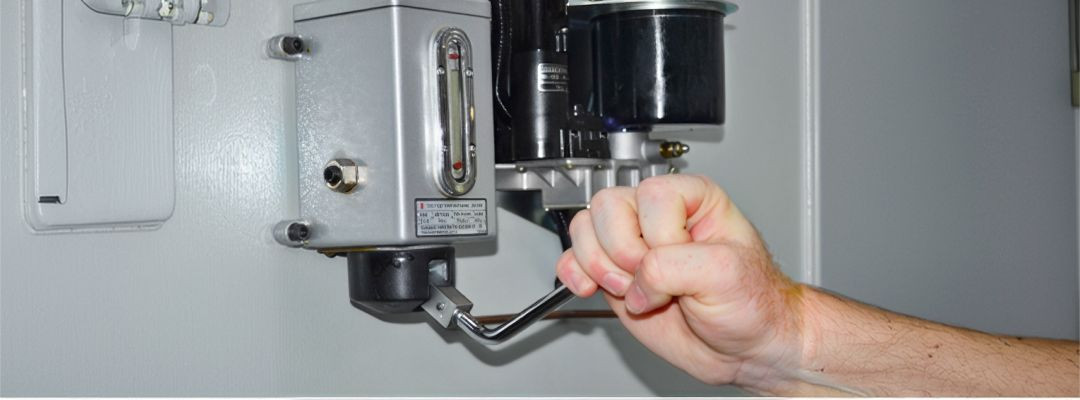
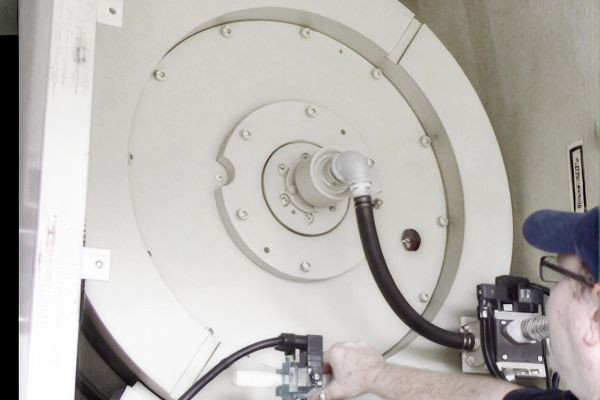
A hydraulic overload protection system is built into the press's slide connection assemblies. Where the pump and its components sit varies by press series and by the year a press was built: the OCP Series carries it at the back of the ram, while some G2, GTX, and S2 presses carry it inside the slide body instead.
Every configuration works the same way. A limit switch monitors the pump and reports its status directly to the press's PLC or press control, and the moment a stroke pushes tonnage past the set threshold, that signal is what stops the crank. The stroke gets cut off in milliseconds, before a hydraulic overload can reach the connecting rod, crankshaft, and frame the way it would on an unprotected press.
Tonnage overloads rarely come from a single obvious cause. Any one of the following can produce a tonnage overload on a stamping press:
None of these problems needs to be severe on its own. A press running close to its rated tonnage has little cushion left, so even a small version of any of the three is enough to trigger an overload, and it happens in the time it takes the ram to complete a single stroke.
An electronic tonnage monitor and hydraulic overload protection serve different purposes. The monitor reads strain gauge or load cell data over many strokes and can warn an operator or fault out the press when force trends run high, catching a problem before it turns into an overload. That kind of monitoring is predictive.
A press overload protection system, by contrast, only acts once an overload has already started. It reacts in milliseconds, stopping the press before the stroke that caused the overload can finish.
A tonnage overload has to go somewhere. On a press without adequate protection, that force travels through the connecting rod and crankshaft, and a crankshaft is not a part designed to absorb a shock load. A cracked or broken crankshaft takes the press out of production for the time it takes to source the part, schedule the repair, and rebuild the drivetrain around it. The same overload that breaks a crankshaft routinely ruins the die in the same stroke, and a die built for a specific part can represent a far larger investment than repairing the press itself.
Press overload protection exists to prevent this outcome. The cost of running without it goes well beyond the repair bill. It includes the unplanned downtime on a production line that was scheduled to run, the lead time to replace a damaged die, and the missed delivery dates that follow. Hydraulic overload repairs and troubleshooting is a standing line item on Stamtec's press repair and rebuild services for exactly this reason.
Resuming normal operation starts with inching the slide back to top dead center, which automatically reactivates the pump and re-pressurizes the system to its original settings. That part of the reset is largely automatic. What's not automatic is the judgment call that should come before it: identifying what triggered the trip in the first place, whether that's a jammed part, a double blank, or a die that has started to wear unevenly.
Component locations and exact procedures vary by press series and by the year a press was built, so this is general guidance rather than a substitute for the steps in a press's manual. Tooling should be inspected before the next cycle runs, even when the reset itself goes smoothly, because the trip that protected the frame may still have marked the die. Stamtec's technical resources and service team are available to walk through a reset or troubleshoot a system that's tripping more often than expected, and the press maintenance team can build overload checks into a standing inspection schedule so the pattern is caught early.
Stamtec builds fast-response hydraulic overload protection into every mechanical press it manufactures, gap frame and straight side alike. The S1 Series Straight Side Press carries it through a tonnage range of 165 to 2,650 tons, and the OCP Series Gap Frame Press carries the same protection from 27 to 330 tons. A hydraulic overload press system built into the slide of either machine responds the same way regardless of frame size: it reacts to force, not to which series it is protecting.
Stamtec's technical resources library includes a closer look at how the system works inside the press, covering the hydraulic overload protection system Stamtec builds into its mechanical press lines. It's a useful reference for engineers and maintenance teams who want the mechanical detail behind the feature before it ever needs to trip.
In many cases, yes, though the answer depends on the press's slide design, adapter plate, and how much room the frame has for the hydraulic cylinder and control components a retrofit requires. Some older presses can accept the system with modifications, and others need a more extensive rebuild to fit it properly. Stamtec's service team can assess a specific press and its drawings to determine what a retrofit would involve before any work starts.
{
  "@context": "https://schema.org",
  "@type": "FAQPage",
  "mainEntity": [
    {
      "@type": "Question",
      "name": "Does hydraulic overload protection replace the need for a tonnage monitor, or do the two systems serve different functions?",
      "acceptedAnswer": {
        "@type": "Answer",
        "text": "They serve different functions, and most well-protected presses run both. A tonnage monitor tracks force stroke to stroke and can flag a job that's trending toward an overload before it happens, which is a maintenance and quality tool as much as a safety one. Hydraulic overload protection is the fail-safe that activates once an overload is already underway, stopping the press in milliseconds regardless of whether a monitor caught the trend first. One is prevention through visibility; the other is protection when prevention isn't enough."
      }
    },
    {
      "@type": "Question",
      "name": "Can a hydraulic overload system be retrofitted onto an older mechanical press that didn't originally include one?",
      "acceptedAnswer": {
        "@type": "Answer",
        "text": "In many cases, yes, though the answer depends on the press's slide design, adapter plate, and how much room the frame has for the hydraulic cylinder and control components a retrofit requires. Some older presses can accept the system with modifications, and others need a more extensive rebuild to fit it properly. Stamtec's service team can assess a specific press and its drawings to determine what a retrofit would involve before any work starts."
      }
    },
    {
      "@type": "Question",
      "name": "How is hydraulic overload protection different from mechanical overload protection (shear pins)?",
      "acceptedAnswer": {
        "@type": "Answer",
        "text": "A shear pin is a single-use mechanical fail-safe that breaks under a specific force, physically disconnecting the drivetrain. Once it shears, the press is down until someone sources and installs a replacement pin, and the pin's tolerance for what counts as an overload is fixed at the time it was made. Hydraulic overload protection resets without replacing a part. Once the cause of the trip is addressed and the fluid and pressure are checked, the press can go back into production without waiting for a spare part."
      }
    }
  ]
}
A shear pin is a single-use mechanical fail-safe that breaks under a specific force, physically disconnecting the drivetrain. Once it shears, the press is down until someone sources and installs a replacement pin, and the pin's tolerance for what counts as an overload is fixed at the time it was made. Hydraulic overload protection resets without replacing a part. Once the cause of the trip is addressed and the fluid and pressure are checked, the press can go back into production without waiting for a spare part.

