 STAMTEC IN 60 SECONDS:
 METAL STAMPING PRESSES
In-stock presses built to your specifications with the power,
durability & reliability your applications demand
For more than 70 years, Stamtec has engineered stamping press machines that manufacturers across North America and beyond rely on for precision, uptime, and long-term value. Through our parent company, we've supplied over 50,000 presses worldwide, and that track record reflects one simple fact: we build equipment that holds up.
Our lineup covers mechanical, forging, and servo pressesservo presses, along with a full range of auxiliary equipment, giving production teams a complete press-line solution from a single source. Learn more about the Stamtec Advantage.
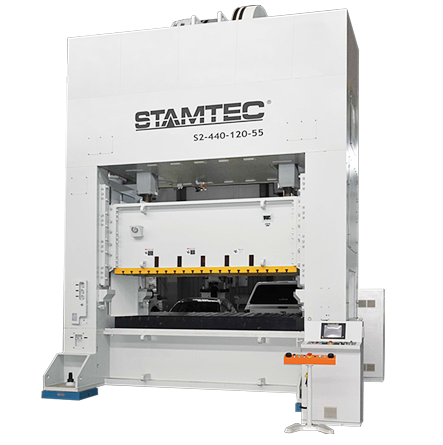
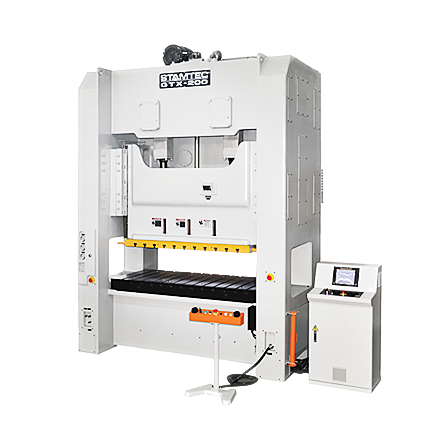
Our mechanical stamping press machines are designed using finite element analysis, resulting in frames with superior strength and maximum resistance to deflection. Stock tonnage runs from 25 to 600, with custom mechanical presses available up to 3,000 tons.
Available configurations include:
Every mechanical press ships with controls from industry-recognized names like Wintriss, Link, and Siemens, standard features that other metal stamping press manufacturers often list as options. Stamtec also offers a high-speed stamping press for high-volume, thin-material applications requiring elevated stroke rates.
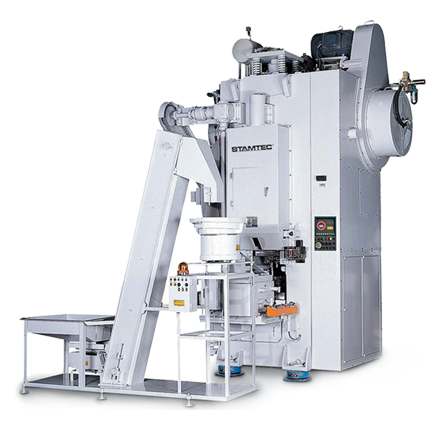
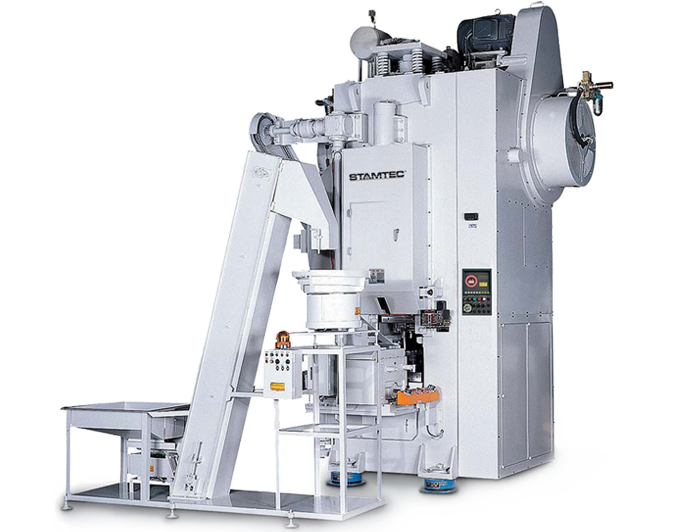
Our forging press machines cover a tonnage range of 220 to 4,000 and serve industries that demand complex, durable parts. For instance, the WF1 Series handles warm and hot forgingwarm and hot forging applications in automotive, medical, and appliance manufacturing, while the KW1 Series excels in cold and semi-hot forging, with a wet clutch system engineered for high torque at low air pressure.
Frames on these stamping press models connect with four full-length steel tie rods hydraulically pre-stressed to 150% of press capacity, a structural approach that holds deflection to no more than .0015 inches per foot of bed length under full load.
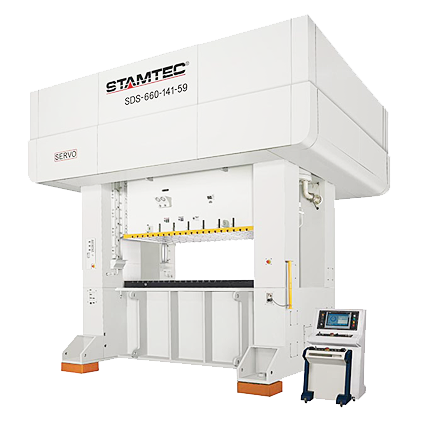
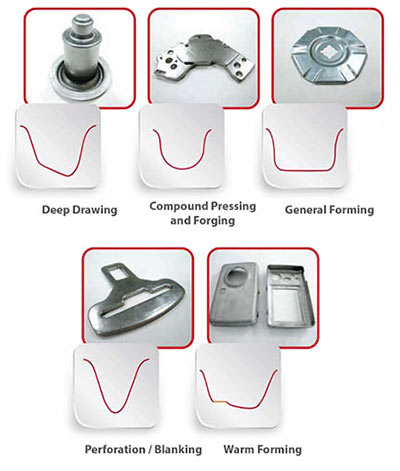
Our servo press machines provide full working energy at any stroke speed, a distinct advantage over hydraulic systems. Slide movement profiles are fully programmable, making servo presses a strong fit for shallow-to-medium drawing, forming, and applications that require precise speed control through the working stroke.
Available in 80-ton C-frame to 2,400-ton straight-side configurations, servo presses include an onboard energy management system that eliminates demand spikes on the electrical grid, reducing operating costs over time.
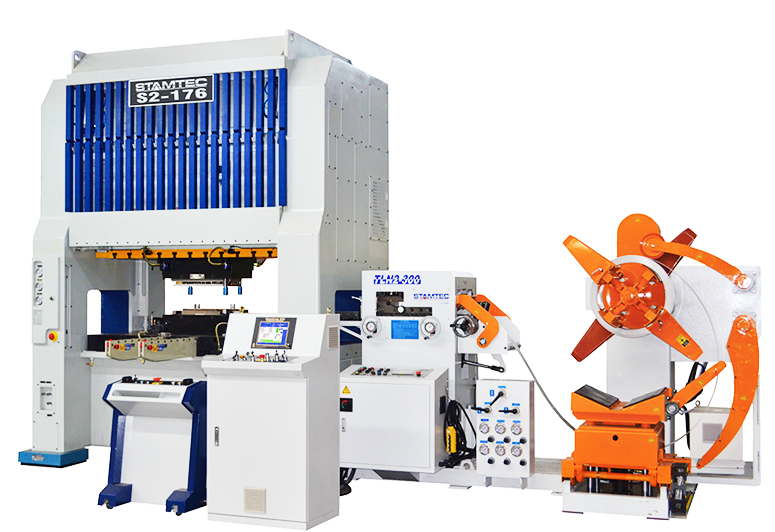
A stamping press machine performs best as part of a fully integrated line. Stamtec supplies turnkey integration for press controls and monitoring, quick die change systems, coil handling and servo feed systems, press transfer systems, and press mounts. Coordinating auxiliary equipment through one source reduces integration complexity and shortens commissioning time.
Our stamping presses solve efficiency problems and prevent costly downtime and production delays. With our high-quality equipment, you can also reduce your overall maintenance costsmaintenance costs.
Some of the features and benefits of a Stamtec stamping press include:
Stamtec offers a wealth of resources to support its customers, including installation examples, stamping press videos, stamping press catalogs, and other helpful materials to help customers get the most out of their Stamtec equipment.
Explore our wide range of resources to better understand our stamping press products and services. Our resources can also help you troubleshoot common issues and stay informed about the latest industry trends and best practices.
Finding the right stamping press starts with understanding your production requirements: tonnage, stroke, part geometry, and cycle rates. Our engineers work directly with your team to identify the right configuration across our mechanical, forging, and servo press lines. Contact us today or call 931-393-5050 to get started.
Contact UsLead times vary by model and configuration. Many gap frame and straight side mechanical presses are available in stock or with quick delivery. Custom configurations, including high-tonnage mechanical presses up to 3,000 tons or specialized servo press setups, carry longer lead times. Contact Stamtec directly at 931-393-5050 for current availability on specific models.
Yes. Stamtec can work with you to explore financing options. You can submit a budget figure via our financing application or call 931-393-5050 to discuss pricing and financing for a specific press model.
Our 3-2-1 warranty programwarranty program covers all new mechanical, servo, and forging presses for three years on a calendar basis, with no hour limitations. You can run 24/7 and remain under full warranty coverage. Most competitors cap their warranties at 2,000 hours per year. Ask a Stamtec representative for full warranty details on the specific model you're evaluating.